Services
How Engineering Air Science assist
Air Quality Impact Assessments
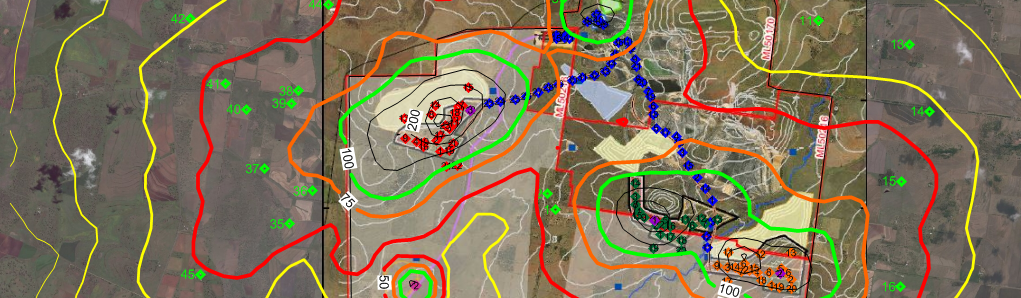
Air Quality Impact Assessment (AQIA) is a procedure applied to evaluate the potential impact processes or activities may impose on air quality. The methodology involves determination of the quantity and character of the emission to the atmosphere, and the application of modelling tools to predict the transport, mixing and interaction of emissions in the surrounding environment.
An AQIA is frequently required for approvals of new developments or extensions on existing operations, a component of an Environmental Impact Statement for Development Approvals. Commissioning an air quality investigation early in the development and design process can assist highlight limitations and avoid potentially costly environmental compliance issues.
Engineering Air Science has experience in the application of many air quality assessment tools including more simple, Gaussian based plume formulations (R91, ISC, AUSPLUME); 'new generation' Gaussian models with more advanced meteorological and dispersion processes (ADMS, AERMOD); and more complex 3D modelling tools (CALPUFF, TAPM, GRAL).
Expertise at Engineering Air Science is differentiated by a background in the simulation of complex atmospheric turbulence and dispersion phenomena critical to near-field, or near-neighbour, air quality impacts, providing improved consideration of the local environment and confidence in Air Quality Impact Assessment outcomes.
Environment & Fluid Mechanics
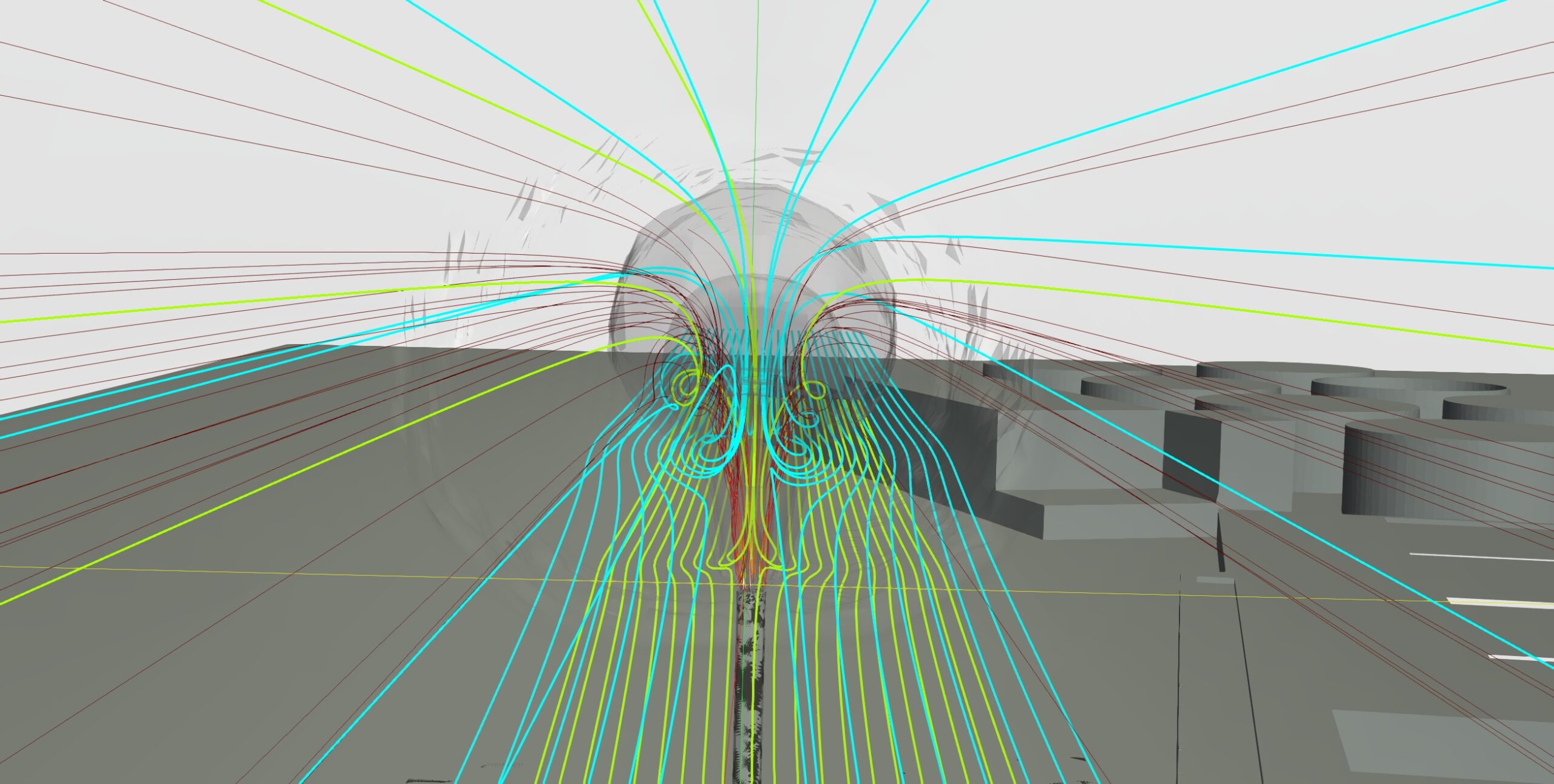
Engineering Air Science provide consulting services across the air environment and industrial fluid mechanics utilising measurement and modelling methodologies to aid understanding of complex environmental, air quality and fluid mechanical issues.
Services extend from regional meteorological modelling, monitoring and analysis to the environment within a room or workplace. Knowledge of flow, turbulence and fluid structure is critical to understanding the environment and how heat, moisture, and pollutants or contaminants will behave.
Examples of less standard projects include analysis and terrain correction of meteorological surface wind monitoring, investigation of the influence of meteorological conditions on natural product drying, and the potential for airborne virus transmission within the ambient environment.
Monitoring and measurement experience embraces flow, turbulence, thermal structure and pollutant concentration measurement and analysis, including direct heat flux and high-frequency concentration statistics measurement in complex laboratory experiments.
Numerical & Physical Modelling
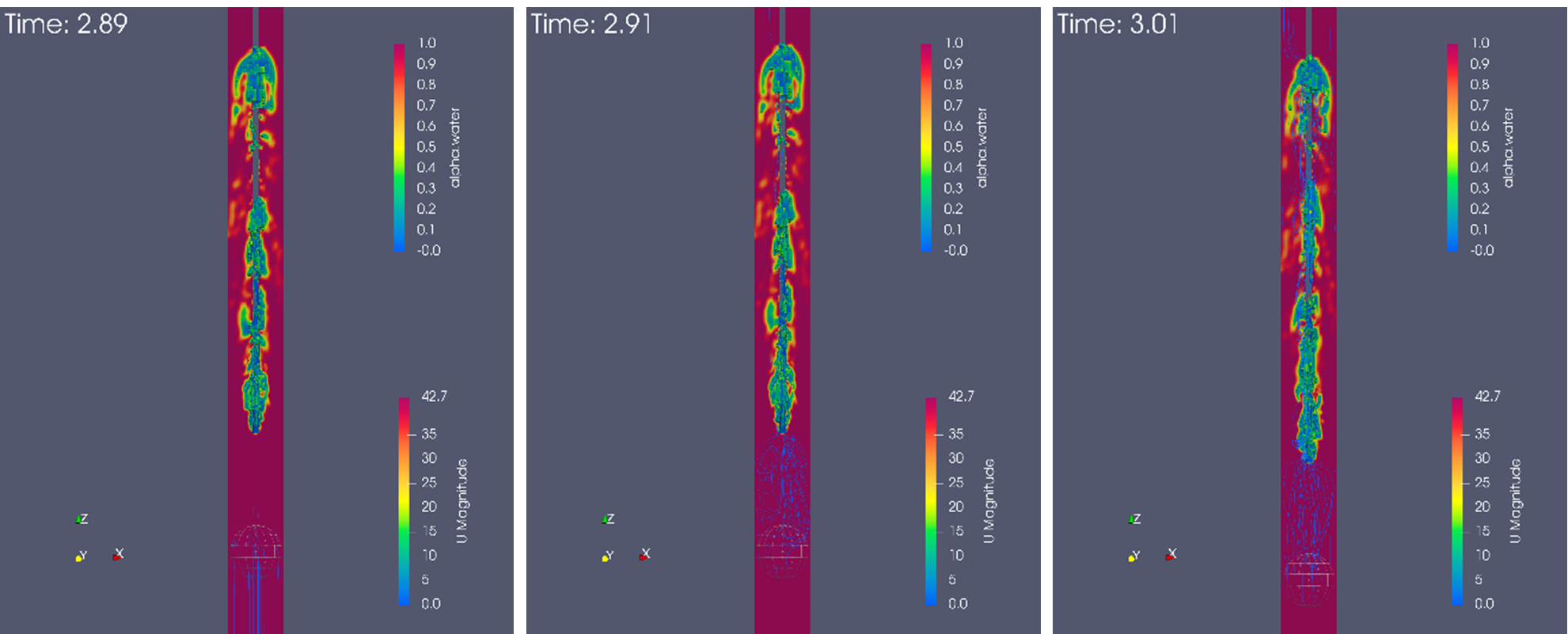
The application of fluid modelling, numerical and/or physical simulation, to air quality provides ability to capture critical flow and turbulence structures. The interaction of terrain or structural features with the atmospheric flow can lead to local flow displacement and turbulence development.
Advanced numerical simulation is carried out via Computational Fluid Dynamics (CFD). The approach numerically solves the fundamental mathematical equations describing fluid behaviour based on the conservation of mass, momentum and energy.
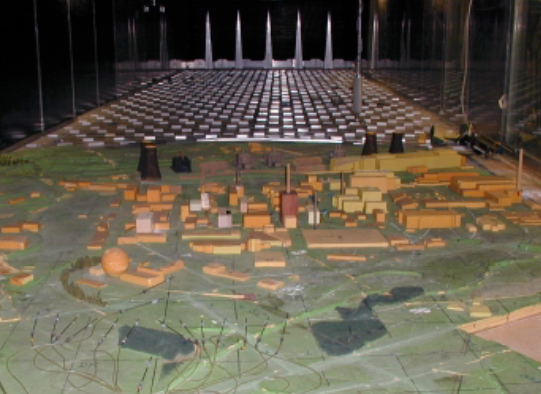
Physical modelling is the approach whereby real fluids are used to emulate specific flow environments using scaled models. Experimental apparatus, such as wind tunnels or water tanks, are designed and developed to represent specific flow characteristics.
Selective use of fluid modelling can enhance understanding of complex fluid mechanical issues influencing air quality, improve regulatory dispersion model parametrisation and inputs, providing for more reliable air quality impact assessment.
Expert Services
With knowledge and experience across a broad range of industries and application of various methods and tools to investigate and predict complex flow and dispersion in the environment, EAS provides a near unparalleled capability to provide expert advice and services.
EAS provide Peer Review across air quality including highly involved monitoring programs and the application of modelling including computational fluid dynamics modelling for understanding complex flow and pollutant dispersion issues.
Dr T John Taylor's experience in provision of Expert Witness services for air pollutant transport and dispersion issues includes odour and its potential for nuisance or annoyance, the impact of mining operations to air quality, and complex flow issues across a range of jurisdictions and courts.
From a letter of clarification to in-depth review and analysis of highly intricate and controversial flow and dispersion matters, Engineering Air Science provides expert advice and services including Peer Review and Expert Witness.